
As CoE MARBLE concludes another successful year, we reflect on a remarkable series of invited lectures. Throughout 2025, our lectures—held in collaboration with UNIZG-FER (LABUST), and the IEEE OES University of Zagreb Student Branch Chapter—served as a vital platform for knowledge exchange between international experts and our local research community. From the protection of submerged cultural heritage to the application of crypto-economics in robot swarms, here is a summary of the sessions that defined our year.
Cultural Heritage & Remote Sensing
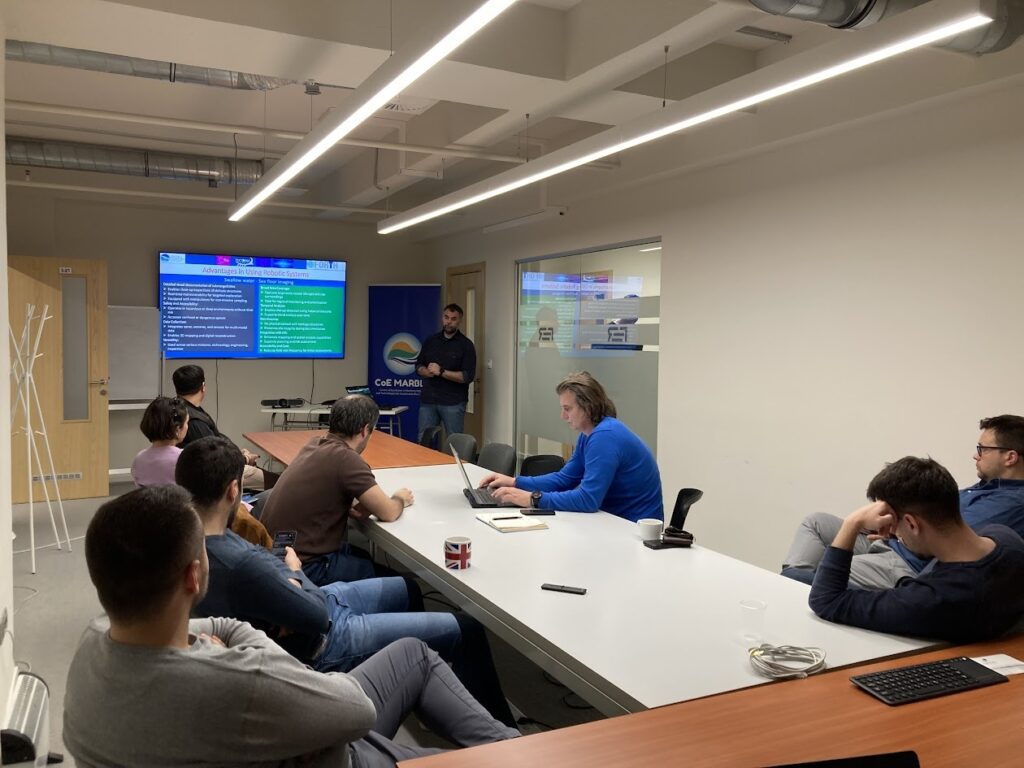
On April 15th, Dr. George Alexandrakis (Coastal & Marine Research Lab – FORTH, Greece) delivered an impactful lecture titled “Robotic and Remote Sensing Applications in Coastal Heritage Conservation, Advantages and Challenges”. He detailed how integrating satellite imagery, LiDAR, and ROVs allows for high-resolution documentation of submerged archaeological structures, particularly in dynamic, shallow-water environments (more details available here).
Advanced Communication & Localization
As maritime operations move toward swarm intelligence and high-speed data, two speakers addressed the fundamental challenges of connectivity and positioning:
On April 11th, Filip Lemić explored the versatility of positioning technologies in “Localization as a Cross-Domain Enabler of Novel Wireless Applications.” His talk bridged the gap between 5G-aided UAVs, medical body-centric localization, and their applications in maritime robotics (more details available here).
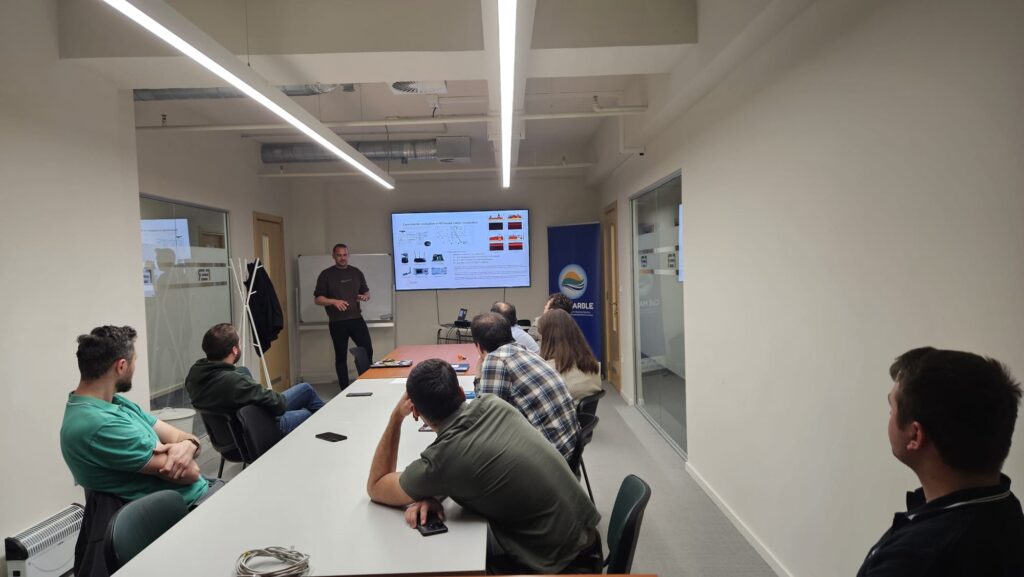
On December 8th, Prof. Karl von Ellenrieder (Libera Università di Bolzano) provided a deep technical dive into “Sliding mode observers for the acoustically-aided inertial navigation of underwater vehicles,” focusing on enhancing navigation reliability (more details available here).
Robotics, Swarms & Crypto-Economics
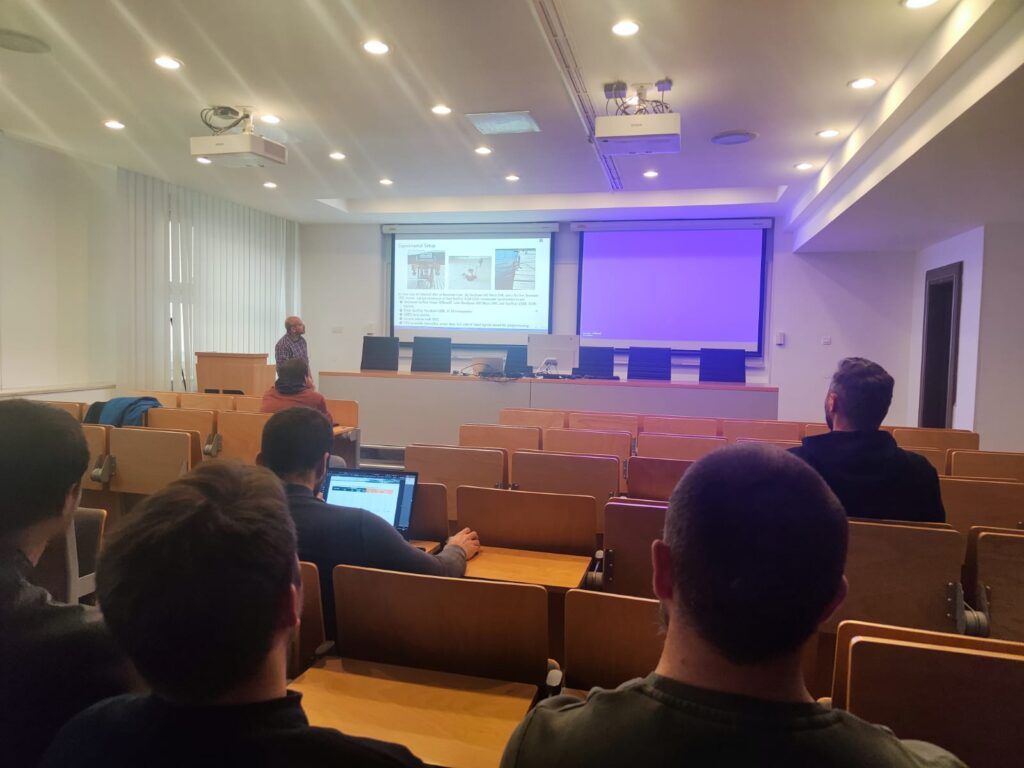
On April 15th, Francesco Cerri (Piacenza, Italy) introduced a pioneering concept in “Reputation Management in Open Robot Swarms through Crypto-Economics.” This lecture explained how token-based reward systems and econometrics can identify “Byzantine agents” (malfunctioning or malicious robots) to ensure the cooperation and effectiveness of a swarm (more detalis available here).
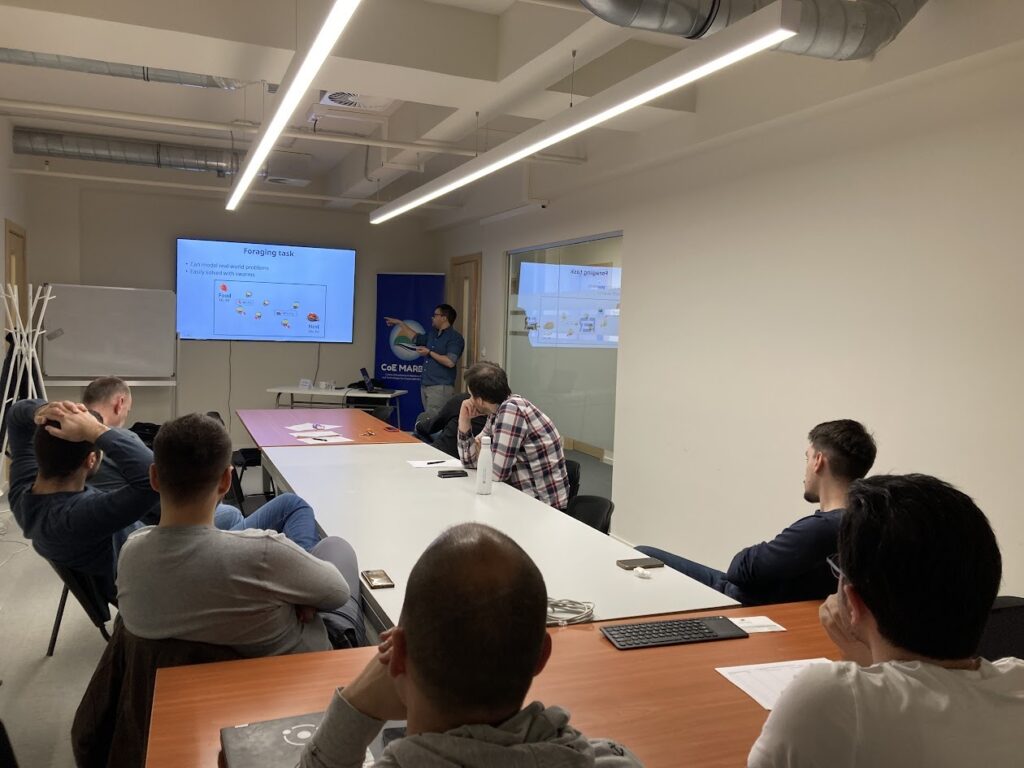
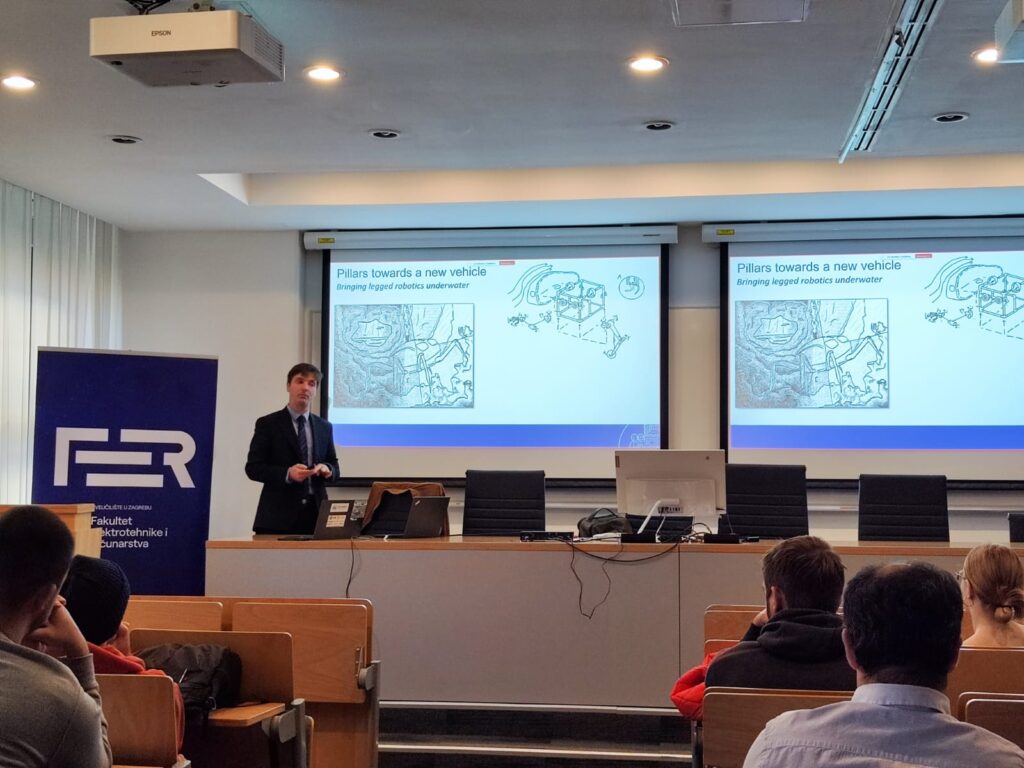
On October 28th, Assoc. Prof. Marcello Calisti (Scuola Superiore Sant’Anna) brought a biological lens with “Underwater Legged Robotics: A Bio-Inspired Approach to Marine Operations,” showcasing how mimicking benthic life can revolutionize seafloor interaction (more details available here).
Desigining Tomorrow
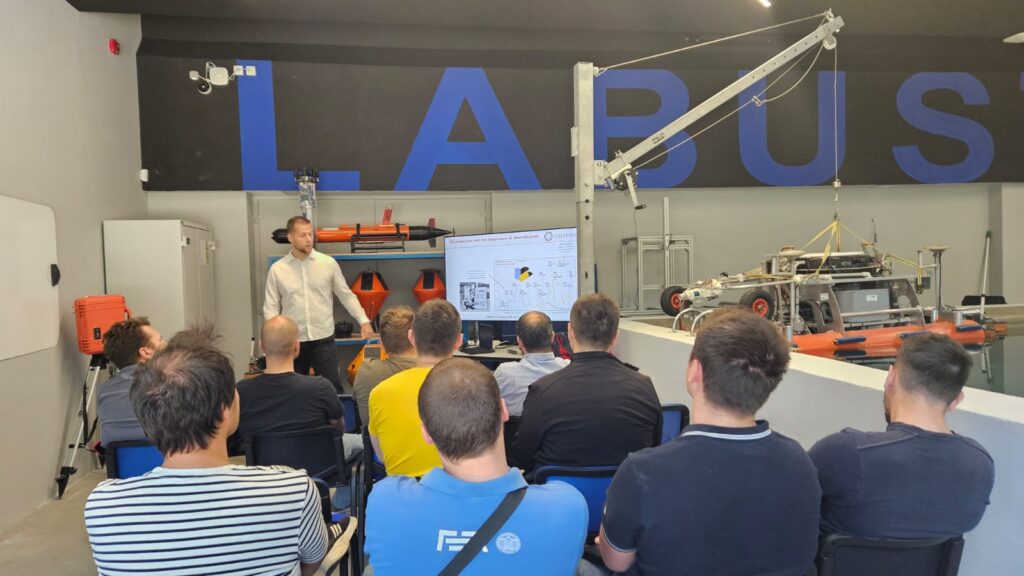
On May 28th, Branko Ban, PhD, held a lecture “Designing Tomorrow: Current State of the Art, Future Outlook, and the Role of Electric Machine Design in a Geopolitical Context” giving a brief overview of economic forecasts in the electric vehicle (EV) industry. He emphasized the role of electric machine design in enhancing EV performance, efficiency, and sustainability (more details available here).
Security, Policy & Ecology
Our series also addressed the broader ecological and strategic contexts of the Mediterranean and beyond.
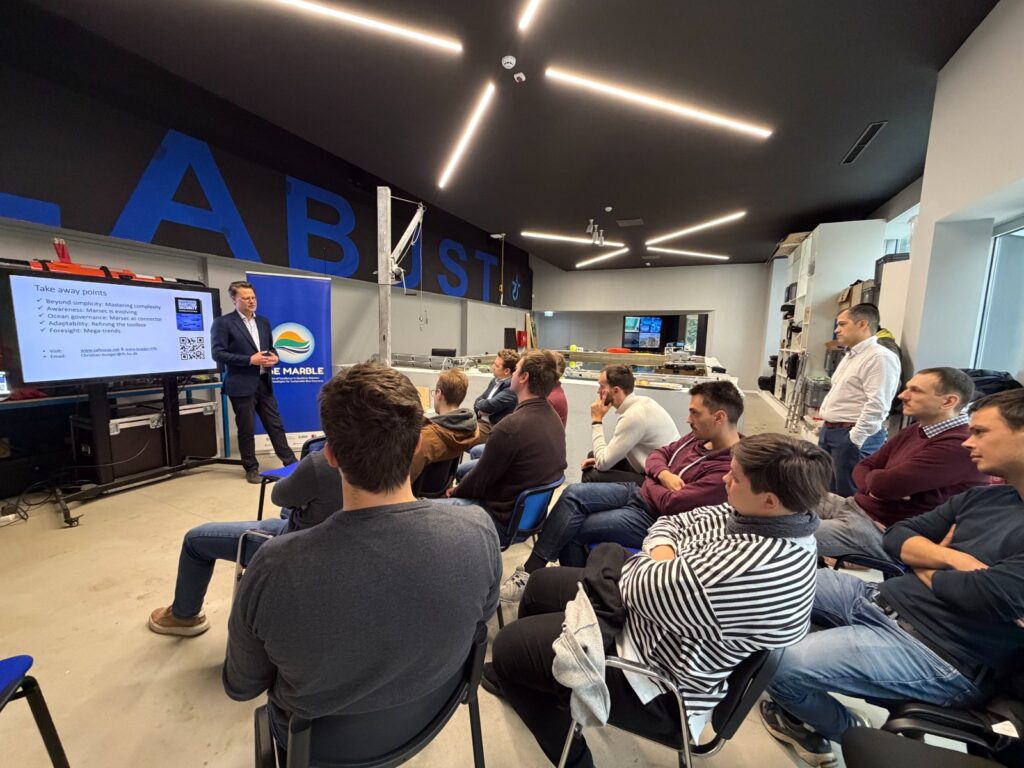
On November 7th, Prof. Christian Bueger (University of Copenhagen) tackled the evolving landscape of global maritime strategy in “Understanding Security at Sea,” emphasizing the protection of critical subsea infrastructure (more details available here).
Environmental monitoring experts like Prof. Marko Ćaleta (November 28th, more) and on Dr. Shyam Madhusudhana (April 22nd, more) shared insights on freshwater fish habitats and modern marine monitoring trends, ensuring our technological goals remain aligned with environmental sustainability.
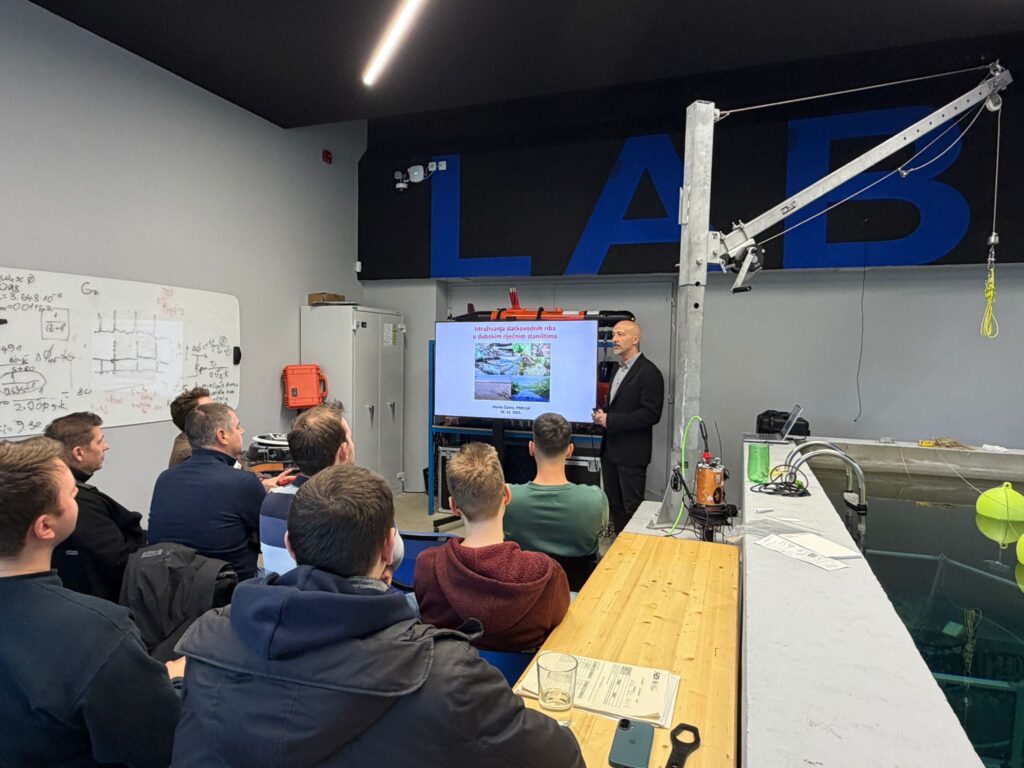
Prof. Marko Ćaleta
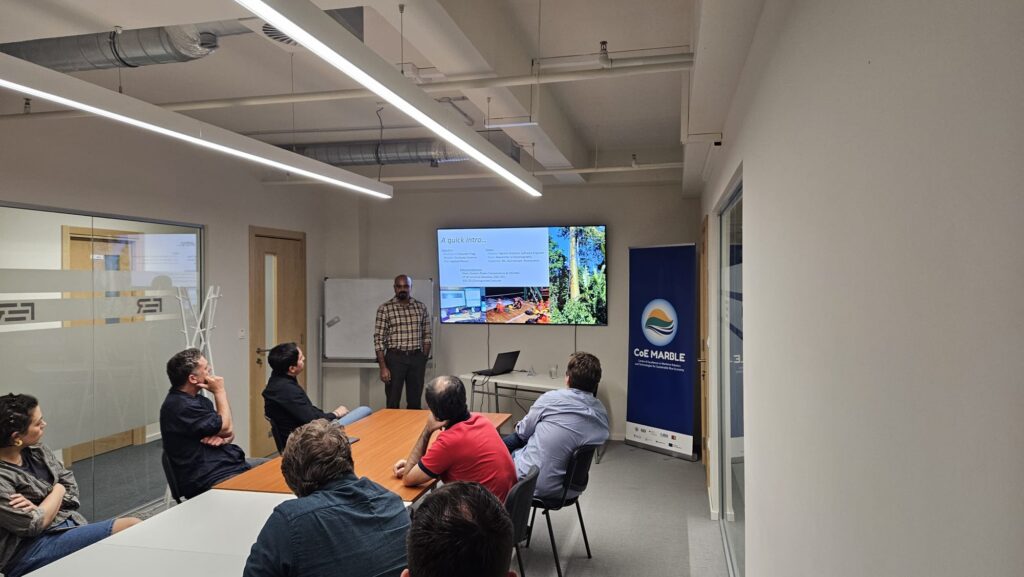
Dr. Shyam Madhusudhana