

Smart Marina was launched in Rijeka on 12 June. The Smart Mussel Farm was launched in Šibenik on 15 June. Here’s the recap.
Last week, two MARBLE pilot sites went from build hall to anchor on opposite coasts of the Croatian Adriatic. Smart Marina was launched at lučica Torpedo in Rijeka on Friday, 12 June. The Smart Mussel Farm was launched at Riva Martinska in Šibenik on Monday, 15 June. Both events followed Adriatic shipbuilding tradition: the porinuće, the moment a vessel crosses from being built to existing in the sea, marked by a godmother, a maritime baptism, and a name.
The Rijeka platform was christened Fiumanka, after the Italian-era name of the city and its famous summer regatta. The Šibenik platform was christened Šibenka, a feminine form rooted in the city’s own name.
Fiumanka · Rijeka · 12 June
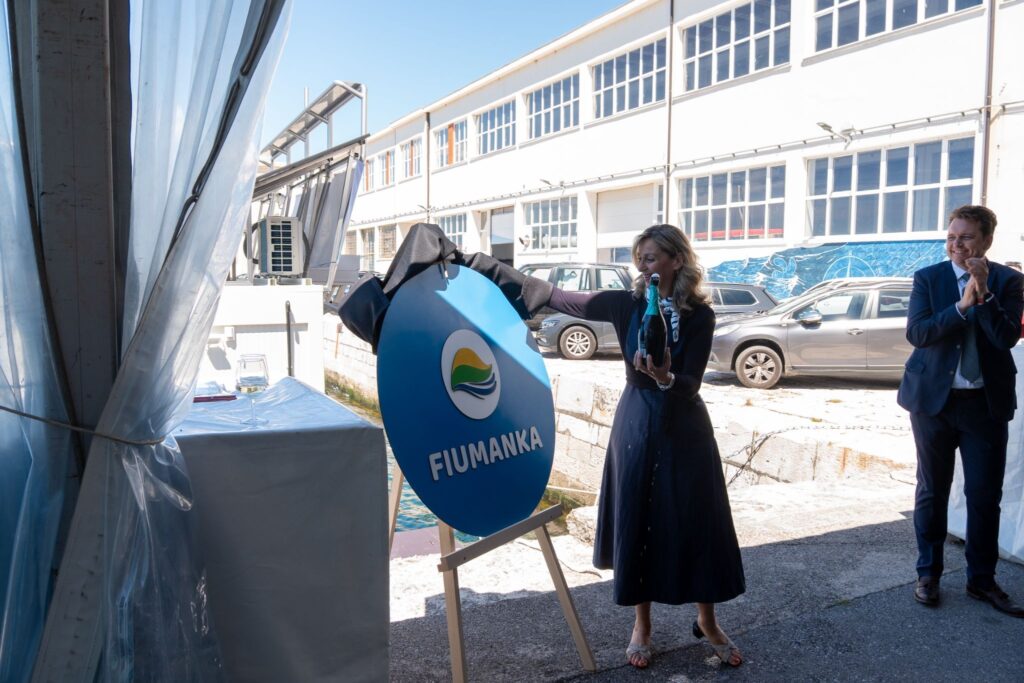
Smart Marina is a solar-powered floating platform made of HDPE pontoons, with a dedicated office and workshop space and an outdoor deck for running experiments. It’s anchored at Lučica Torpedo and built to support the development and testing of autonomous navigation and docking algorithms, as well as port traffic and environmental monitoring, within a live marina.
The ceremony was attended by Deputy Mayor of Rijeka Aleksandar-Saša Milaković; Head of Department for Maritime Property, Transport and Communications of Primorje-Gorski Kotar County Izabela Linčić Mužić; Assistant Director of the Port Authority Rijeka Radmila Krtinić; MARBLE Director Prof. Nikola Mišković; and Fiumanka’s godmother Prof. Sandra Janković, Vice-Rector for Finance and Operations at the University of Rijeka. They were joined by project partners, maritime technology experts, and representatives of MARBLE, the City, the County, and the University.
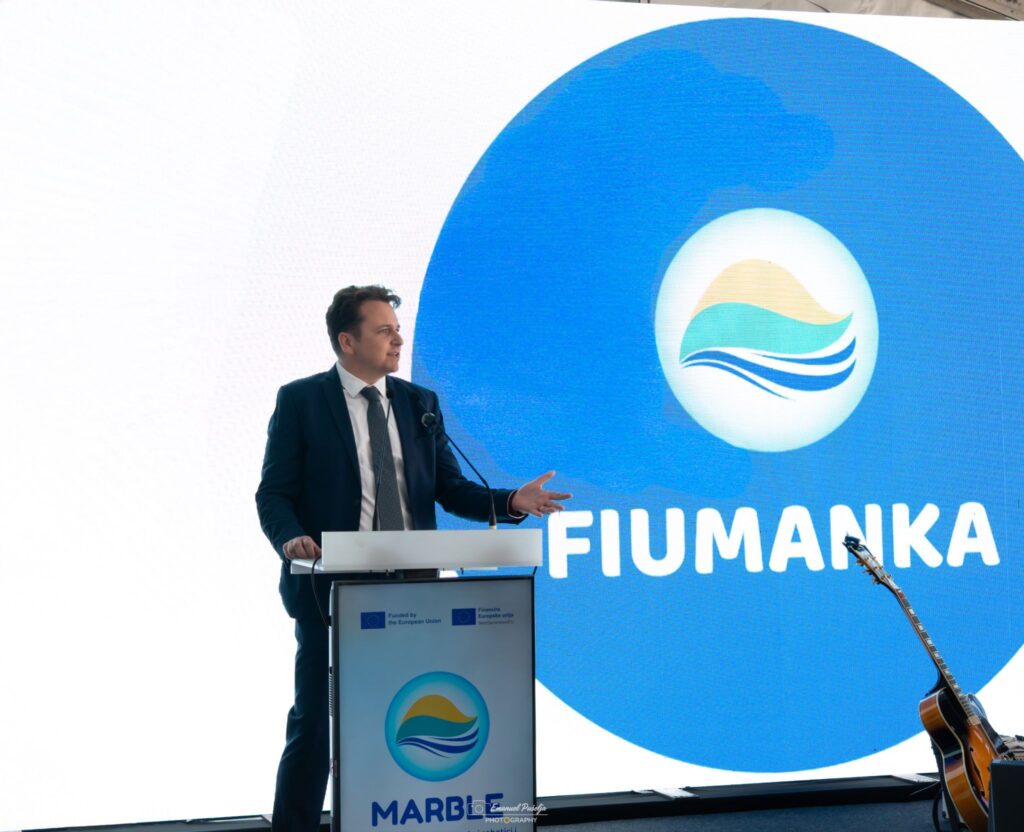
In his remarks, Mišković framed the launch as a regional positioning moment. “With this unique research platform, Rijeka is becoming a national, but also regional centre for research and development of autonomous maritime technologies,” he said. He added that the platform is built to grow an ecosystem of stakeholders across nautical, marine ecology, and sustainable maritime space management, and to deepen cooperation between science, business, and the public sector.
Sandra Janković, christening the platform, spoke about what Fiumanka will mean for the people who use it. “It is an exceptional honour to be godmother of Smart Marina and in this way support the development of research infrastructure and projects in Croatia. I believe our local researchers and students will benefit greatly from this initiative in their academic work and education, and that the infrastructure will allow them to test and validate research in real conditions.” She added that she hopes Fiumanka will spark new projects between academia and industry across the maritime sector.
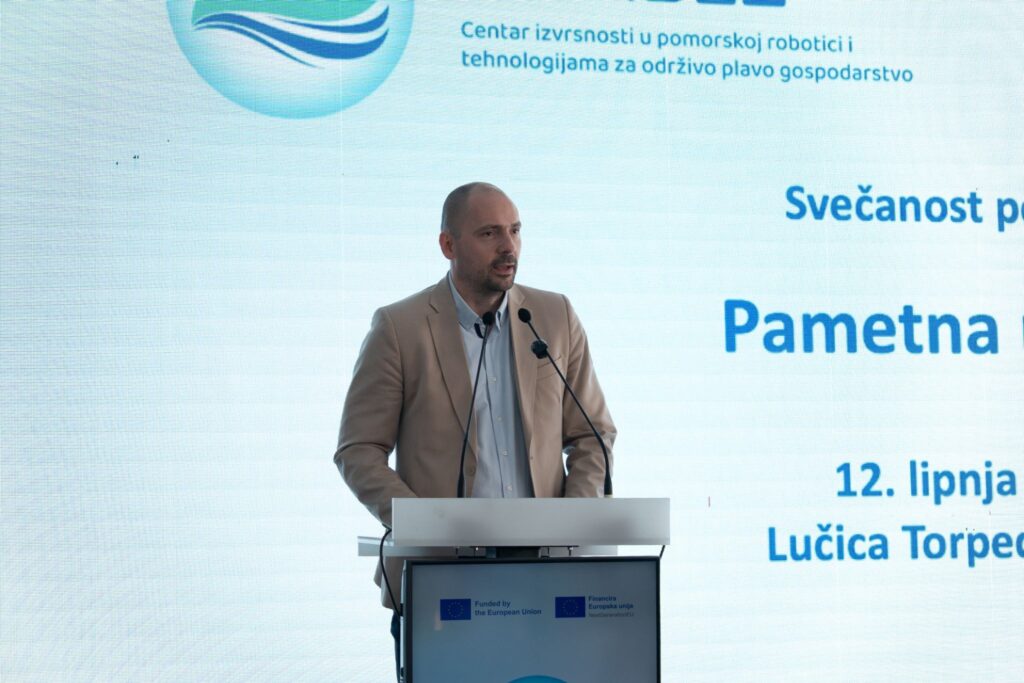
Deputy Mayor Milaković noted that Rijeka has built its identity on the sea for centuries, and that projects connecting maritime tradition with future technologies belong in the city. Izabela Linčić Mužić framed digitalisation and automation in shipping not as a threat to seafarers, but as an opportunity for the sector when matched by a regulatory framework that keeps pace.
Šibenka · Šibenik · 15 June
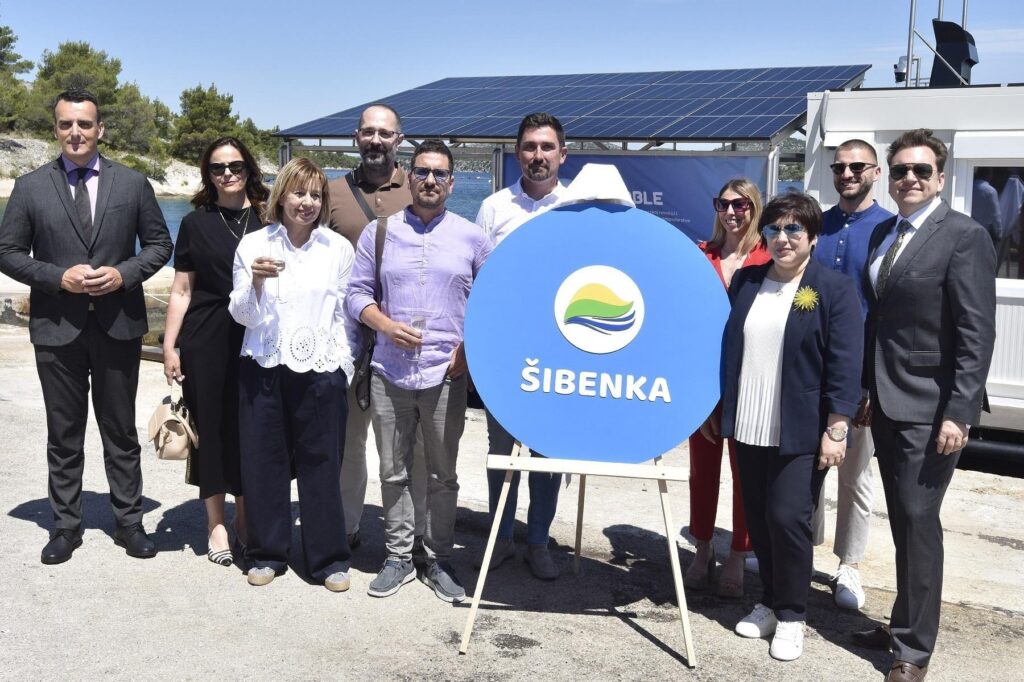
Three days later, the 20 × 10 metre Smart Mussel Farm was launched at Riva Martinska. The infrastructure consists of a permanently anchored research platform, a pontoon with cages, a raft with mussel cultivation lines, and a central building with office and workshop space. The research platform itself carries cameras, sonar, acoustic positioning for underwater vehicles, and a remotely operated underwater vehicle (ROV) for continuous, real-time data collection.
Šibenka was developed by MARBLE in cooperation with DIH AgriFood Croatia and the Ruđer Bošković Institute.
The ceremony was attended by representatives of the scientific community, industry, local and regional government, and the Ministry of Science, Education, and Youth of the Republic of Croatia. Among those present were Šibenik-Knin County Prefect Paško Rakić; Deputy Mayor of Šibenik Danijel Mileta; Director of the Šibenik Port Authority Jadranka Fržop; MARBLE Director Prof. Nikola Mišković; and Šibenka’s godmother Ivana Bujas Rupić of DIH AgriFood Croatia, alongside project partners and experts in mariculture and maritime technology.
Mišković used the moment to set out the scale of the project. More than €30 million invested in people, equipment, and infrastructure, with the goal of building a national maritime robotics and technologies ecosystem that links science, industry, and the public sector. He noted that MARBLE is the first and only Croatian Centre of Excellence funded through Horizon Europe. As he put it, Šibenik today guards its sea not only with its fortresses, but with knowledge, innovation, and modern technology.
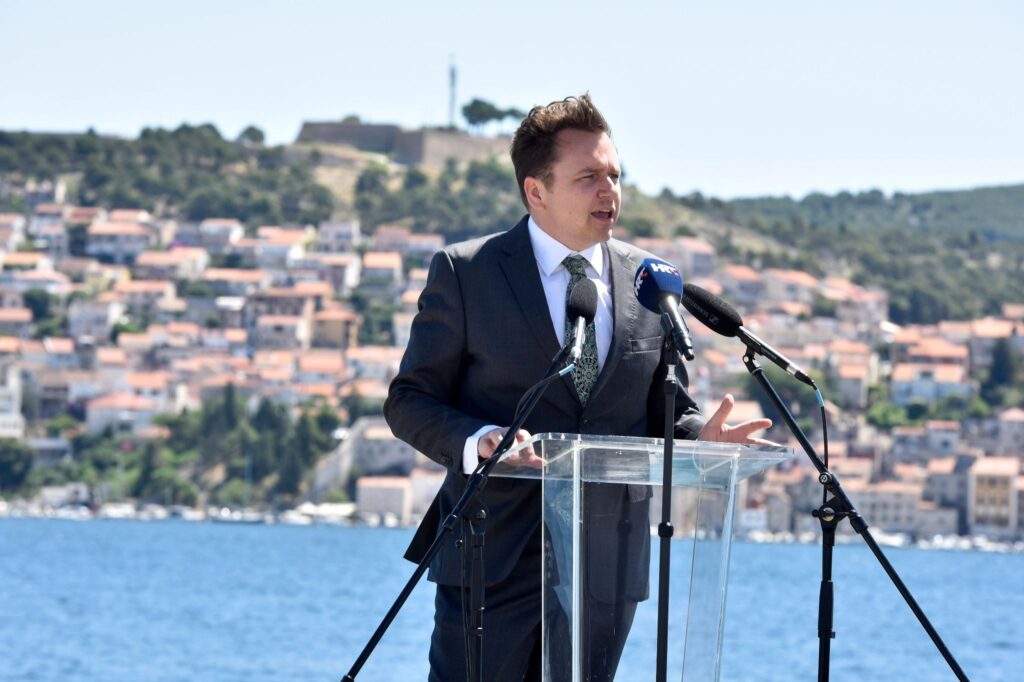
Ivana Bujas Rupić christened Šibenka with a line that captured the cross between digital transformation and mariculture. “Our mission is to encourage digital transformation, and Šibenka is a perfect example of how advanced technologies can be put directly in the service of sustainable mariculture and preservation of the Adriatic. From today, you proudly carry the name Šibenka. Be a symbol of knowledge, innovation, and love for the sea. We wish you calm seas and successful research.”
Deputy Mayor Mileta and County Prefect Rakić both connected the platform to Šibenik’s wider economic story. Rakić called mariculture foundational to the city and the county, and continued investment in its evolution non-negotiable. Mileta added that the cooperation between business, science, and government on display at Martinska is the same model that has driven the most successful European economies.
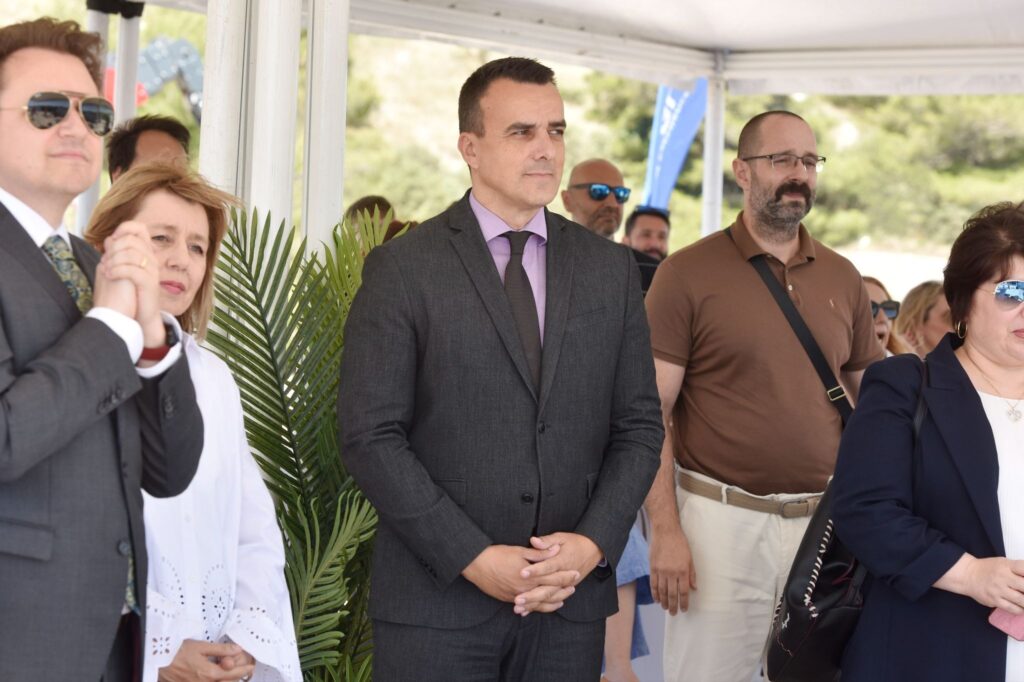
Thanks to all partners, friends, and media who joined us at lučica Torpedo and Riva Martinska. The third MARBLE pilot site, the Autonomous Marine Vehicle Operation Site in Šibenik, will follow later this year.