Site fit for research
Joint evaluation of which MARBLE pilot site best fits the research question, the technology under study and its scientific goals.

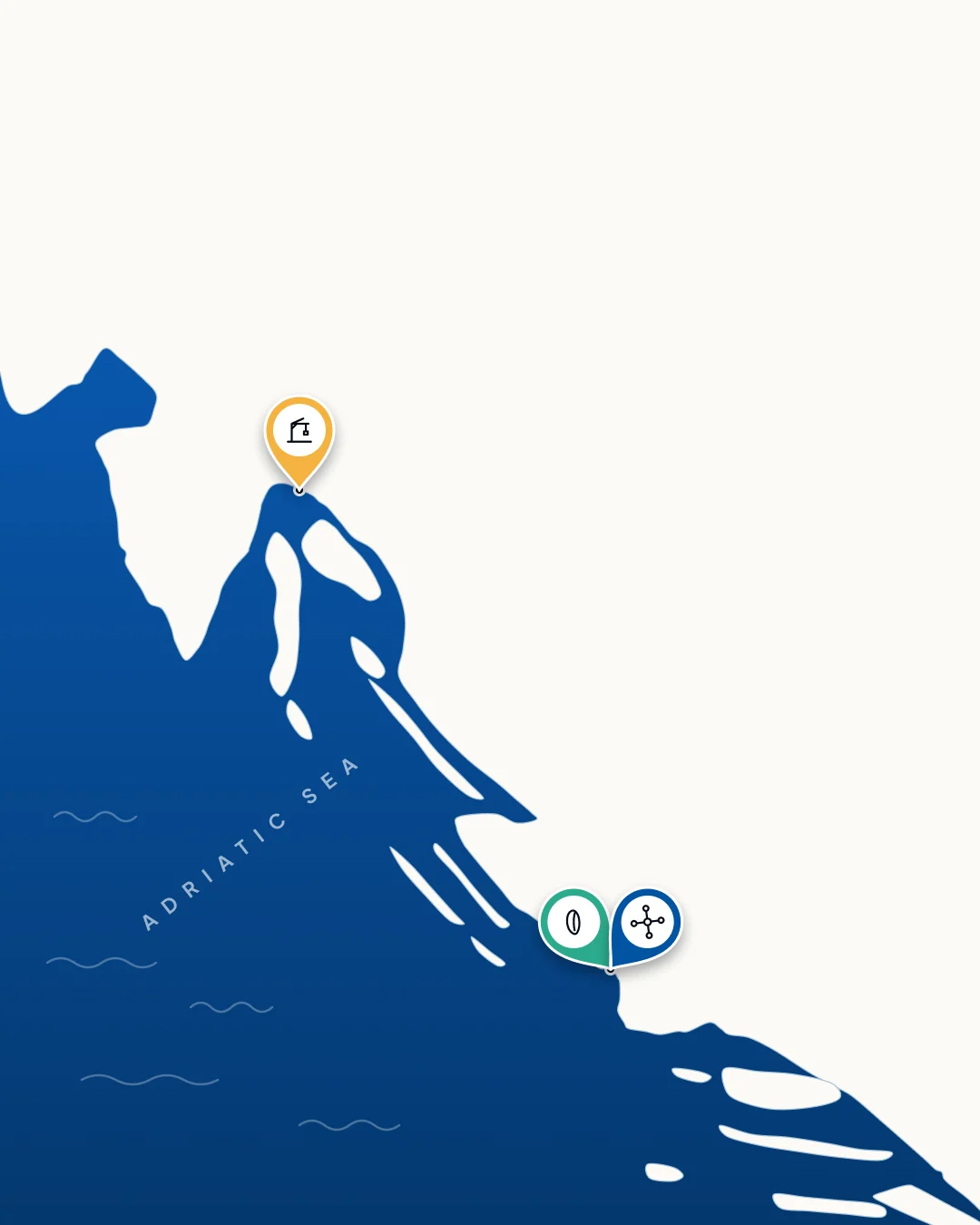
Three instrumented sites on the Adriatic and the engineers who run them, open to research collaborations that test and prove maritime systems in real conditions. Reachable by road from central Europe.
Research Infrastructure as a Service combines two things in one research collaboration.
Three instrumented sites on the Adriatic with moorings, sensors, a support vessel and a workshop, being brought into service in stages.
The engineers who designed and built the sites, who help you plan the trial, work alongside your team at sea and help you make sense of the data afterwards.
Testing at sea normally means finding a location, chasing permits, hiring a boat and shipping people and kit to a coast you do not know. We are building three instrumented sites on the Adriatic. They open to research collaborations from November 2026 in limited scope, and fully from March 2027.
Limited scope from November 2026, full scope from March 2027. Once a site is open, you do not have to build anything.
A support vessel, a workshop and a MARBLE technician on site, plus engineers who know the water.
Drive from central Europe in a day, or work remotely over the live data link from the sites.
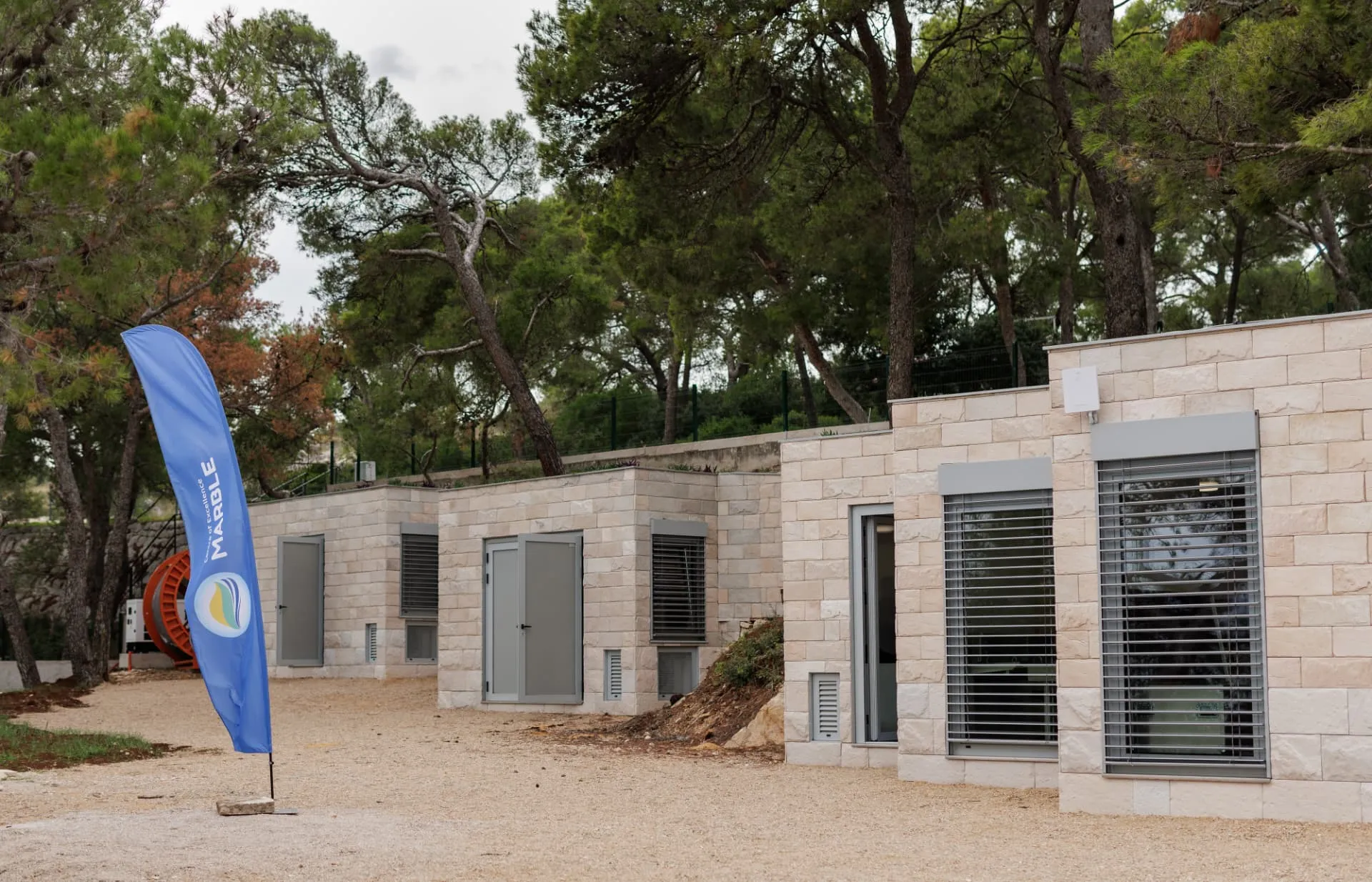
MARBLE Sea Lab. A cabled underwater network of five nodes with surface buoys, a shore station for maintenance and data, and diving support, built for extended autonomous vehicle trials and high-resolution underwater sensing.
Best for Extended AUV/ASV trials · Underwater sensing · Acoustic research
See MARBLE Sea Lab →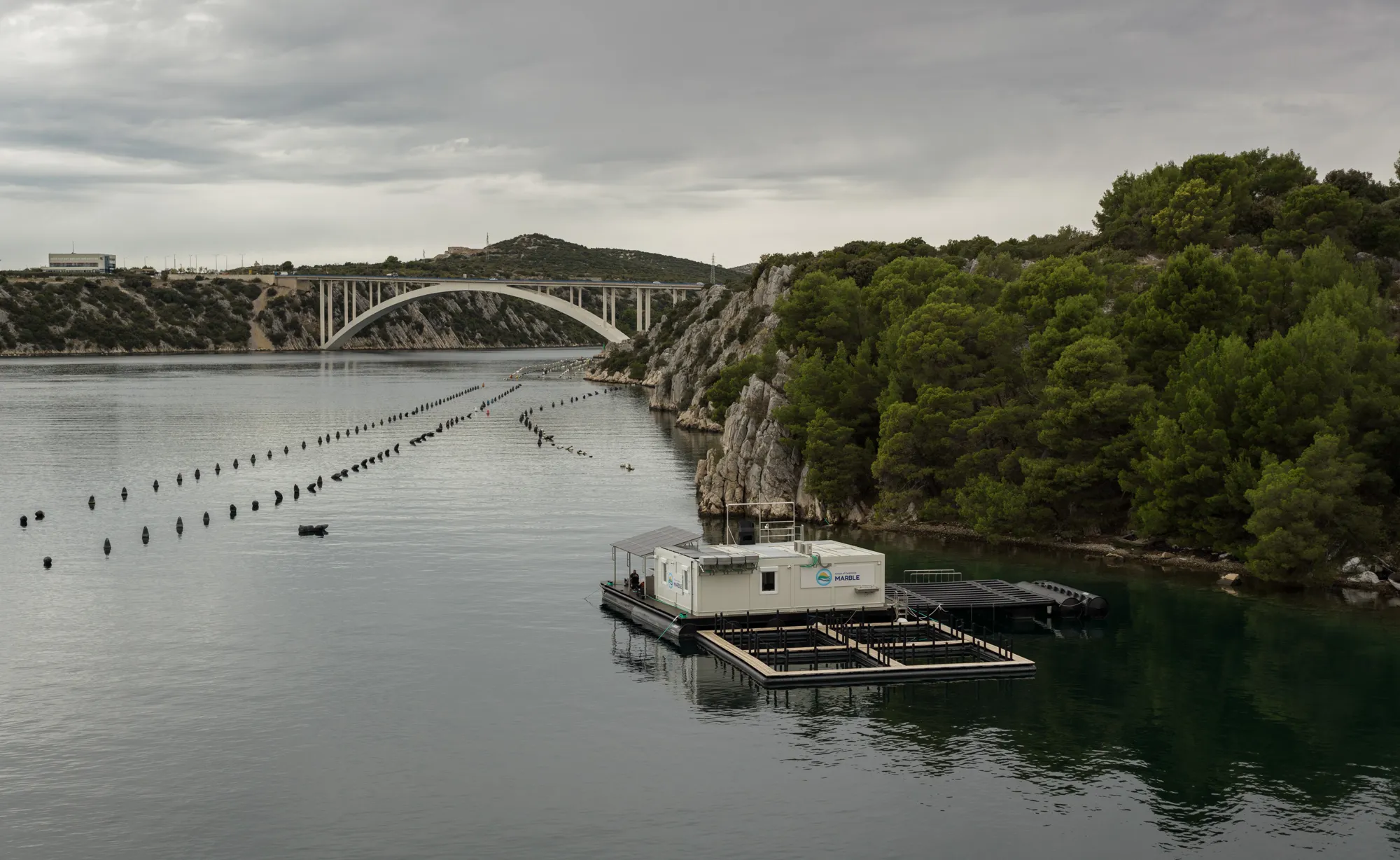
An aquaculture research platform at a mussel farm site, with a fish farm next to it, built in collaboration with AgriFood Croatia. Moored in the middle of the sea, the 16 m × 12 m platform carries on-board office space alongside integrated sensing and ROV deployment.
Best for Aquaculture tech validation · Biological monitoring · Underwater IoT pilots
See Smart Mussel Farm →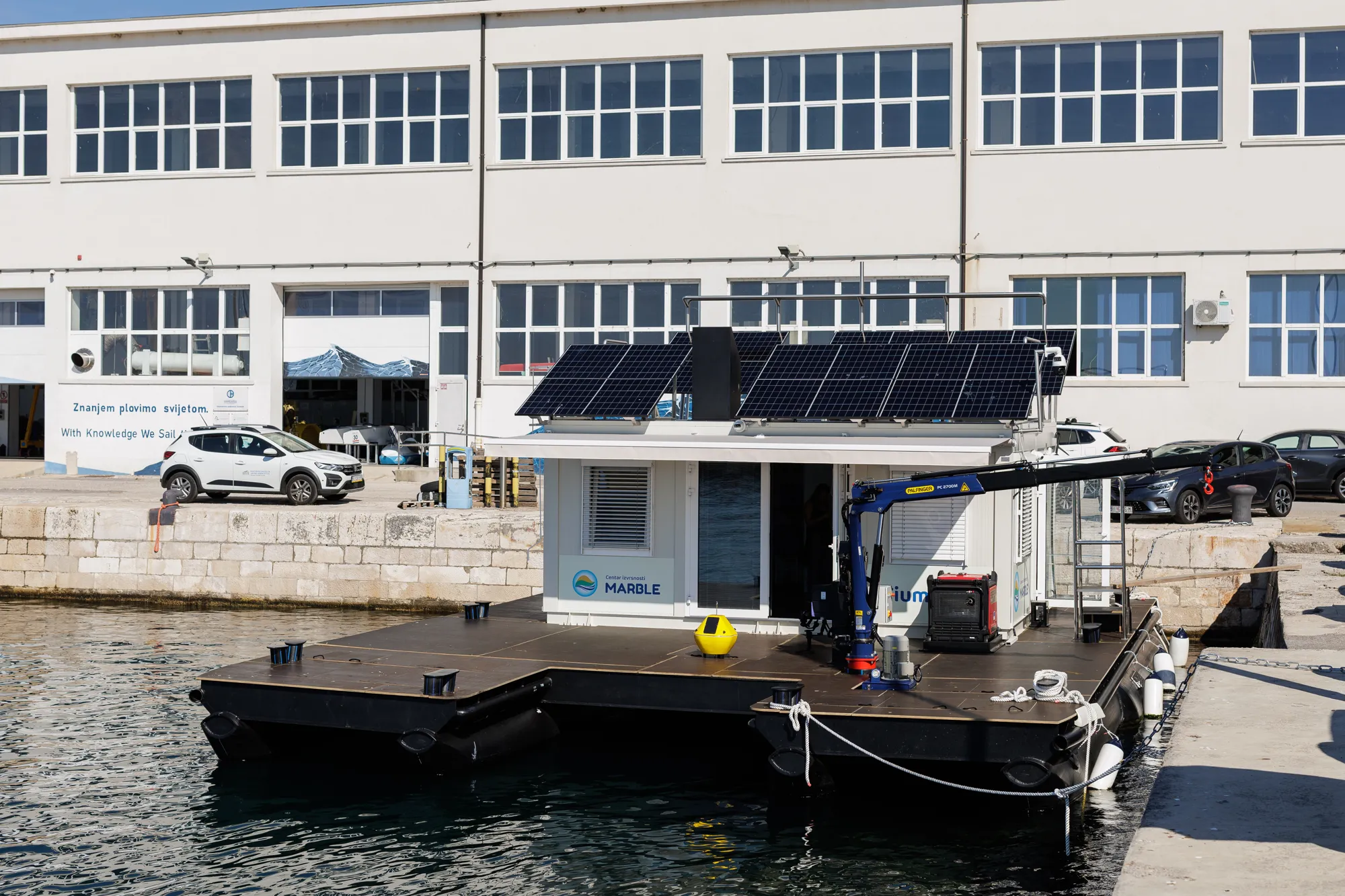
Moored in Port Torpedo, the Smart Marina is an experimental setup that simulates a marina for scientific research: a solar-powered platform for autonomous surface vessel operations and shoreside integration trials. Equipped with a 500kg payload crane, an Autonomous Surface Vessel, and a CTD-equipped profiling float.
Best for ASV trials in a simulated marina setting.
See Smart Marina →Six classes of technology the sites are set up to take, on their own or in combination.
Endurance runs, navigation and localisation trials, and mission autonomy at sea and in confined harbour space.
Hydrophones, cameras and sonars tested on the cabled five-node network at the MARBLE Sea Lab.
Autonomous docking and charging of ASVs and AUVs at the Smart Marina platform is planned as a future development. No docking system is available yet.
Acoustic, radio and shoreside links, including remote operation over the site data feed.
Water quality and environmental monitoring at a mussel farm site, next to a fish farm.
Edge processing, data pipelines and validation against the live site data feed.
Once a proposed activity has been assessed, MARBLE can arrange:
Terms of collaboration are agreed for each research project. Get in touch →
Tell us the research question, what you want to test, when, and with what equipment.
MARBLE assesses the proposed activity, works out which site fits, and shapes the research plan with you.
Activities start once the required approvals, safety conditions and agreed supervision are in place. The research then runs under MARBLE supervision, with our team alongside.
Data, results and what they mean, plus the next round of testing whenever you are ready. You can also leave your equipment at the site and run remote trials with our support, gathering data from anywhere in the world. Most partners come back.
Reach us via the contact form →
Before work at sea, we define the research together: which site fits, what to study and whether it is feasible.
Joint evaluation of which MARBLE pilot site best fits the research question, the technology under study and its scientific goals.
Shared design of the research campaign: hypotheses, methods, measurements and expected scientific outputs.
Preliminary studies that assess whether a research activity at sea is feasible and scientifically worthwhile.
Tell us what you're planning. Get in touch.
Can we work at a single site, or at all three?
The research activity uses the site that fits it. If a campaign needs more than one, we plan them together. The sites open to research collaborations from November 2026 in limited scope, and fully from March 2027.
What support is available in a research collaboration?
Once the activity is assessed and approved, MARBLE can arrange the support vessel, on-site workshop, storage and office space, an on-site MARBLE technician, and access tied to the approved activity. Shipping, customs, travel and lodging are not included. See research support.
How much notice do you need?
Depending on the complexity of the sea trial, it can be organised in less than five days.
Can we operate remotely rather than travel?
Yes. The sites carry a 24/7 remote data feed, with VPN sandbox access for remote users. You can leave your equipment on site and run trials from anywhere.
Who handles permits and consents?
MARBLE handles permits and consents.
Who owns the data from a trial?
The default position is that the customer owns the data.
Questions about MARBLE as an organisation, the funding, or the partners: the FAQ page →
Three Adriatic sites, a support vessel and a technician on site. Give us the system and the window and we will come back with availability and what the trial involves.
Thirty minutes with the team that runs the sites. Bring the system, the trial plan and the dates. You will get site availability, scheduling options and what a trial involves.
Book a callMonday to Friday, 09:00 to 17:00 CET